
#surfaceinspection #superviselearning #metal
STEEL
Metalworking
120 × 120 mm cross-section and 12 m length.
SURFACE DEFECTS
2D cameras

Together with ZOLLERN, we developed an automated camera inspection that is integrated directly into the shot blasting process. Instead of checking each part by hand after blasting, the system inspects the parts automatically and reliably. The solution was honored with the MATERIALICA Design + Technology Award 2026 in the category Process.
Requirement
Shot blasting cleans the surface of metal parts with an abrasive medium. After this step, every part has to be checked: Are there any damages left? Until now, this was done by workers via manual visual inspection. This is tiring, takes time and the result depends on the person doing it. The goal was to automate this check so that defects are detected directly in the process, before they move on to the next production step.
Challenges
- Harsh environment: dust and abrasive particles from the blasting process
- Metal surfaces that reflect light differently depending on angle and surface condition
- Many different part geometries and variants
- High throughput with minimal downtime between profiles.
Hardware
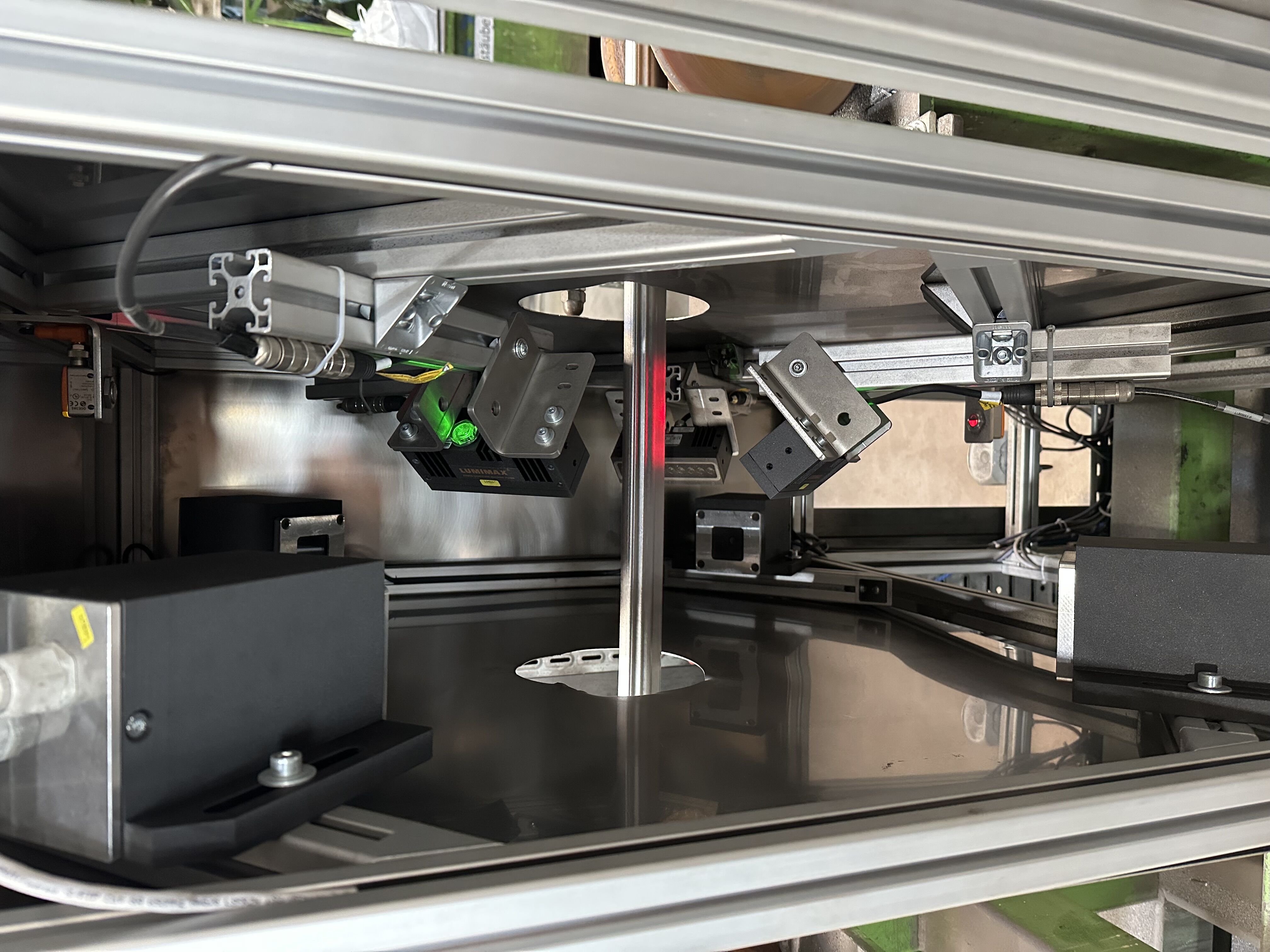
Three industrial 2D cameras capture the profiles form all sides directly after the blasting chamber. The camera setup and lighting were designed to deliver stable images despite dust and reflections. We use autofocus to adapt to the variation in cross-section. The images are processed on an edge device directly at the line, which allows fast decisions without sending data to the cloud.
Software
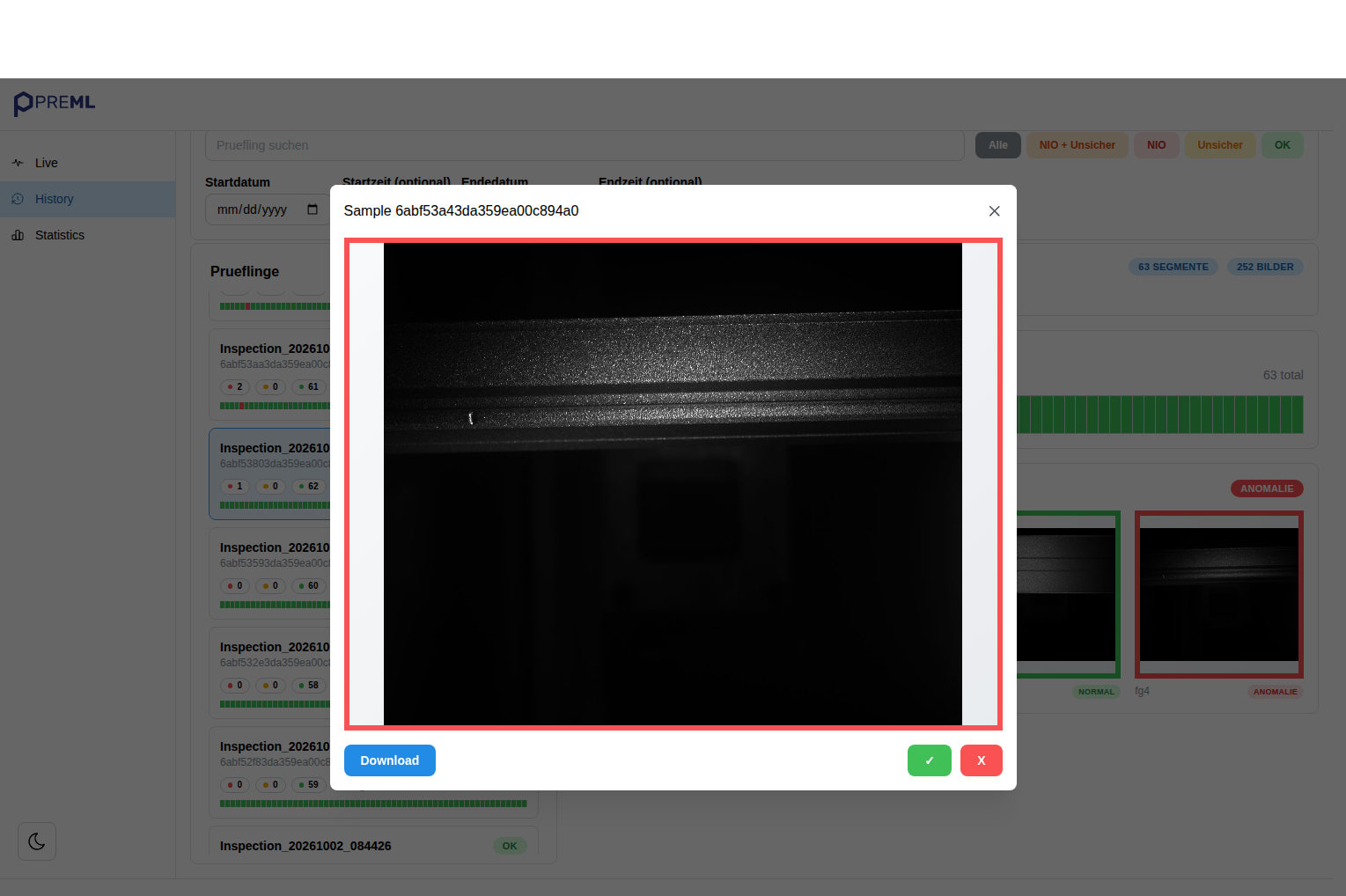
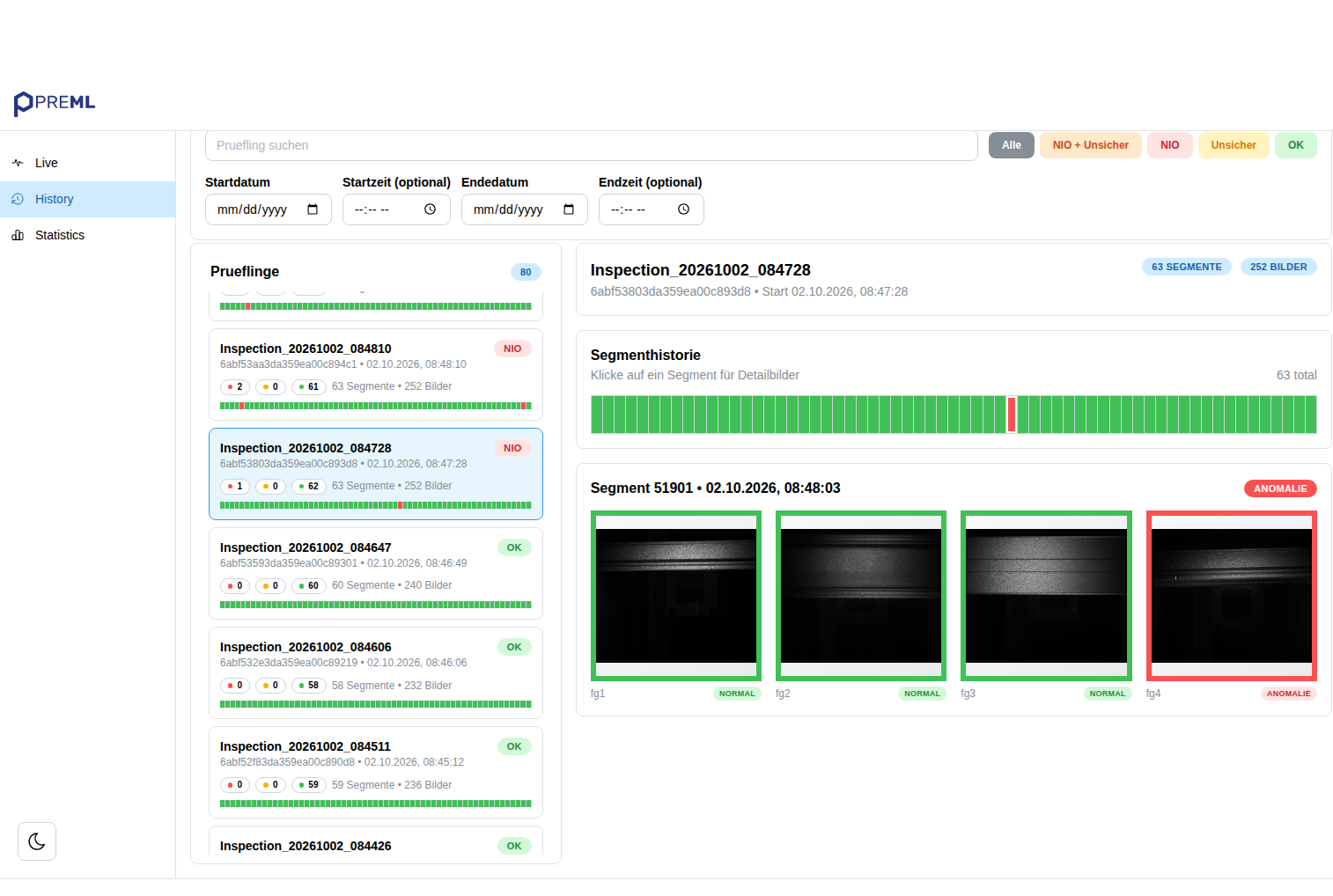
For this application, we trained supervised machine learning models. This means the models learn from labeled example images of good and defective parts and can therefore assign defects to specific classes. The models are based on preML’s in-house infrastructure for machine learning pipelines and are transferable when new part variants are added.
Related Content

MATERIALICA Award 2026 – AI camera inspection at ZOLLERN
We are thrilled: our AI-based camera inspection system, developed together with ZOLLERN GmbH & Co. KG, has won the MATERIALICA Design + Technology Award 2026 in the “Process” category. For us, this is more than a trophy for the shelf. The award shows that AI in production is no [...]